
To Case Studies
07/18/2022
A Low-Cost “Step-Into-the-Screen” Experience
Prof. Kazuhiko Hachiya, Intermedia Art Department, Tokyo University of the Arts
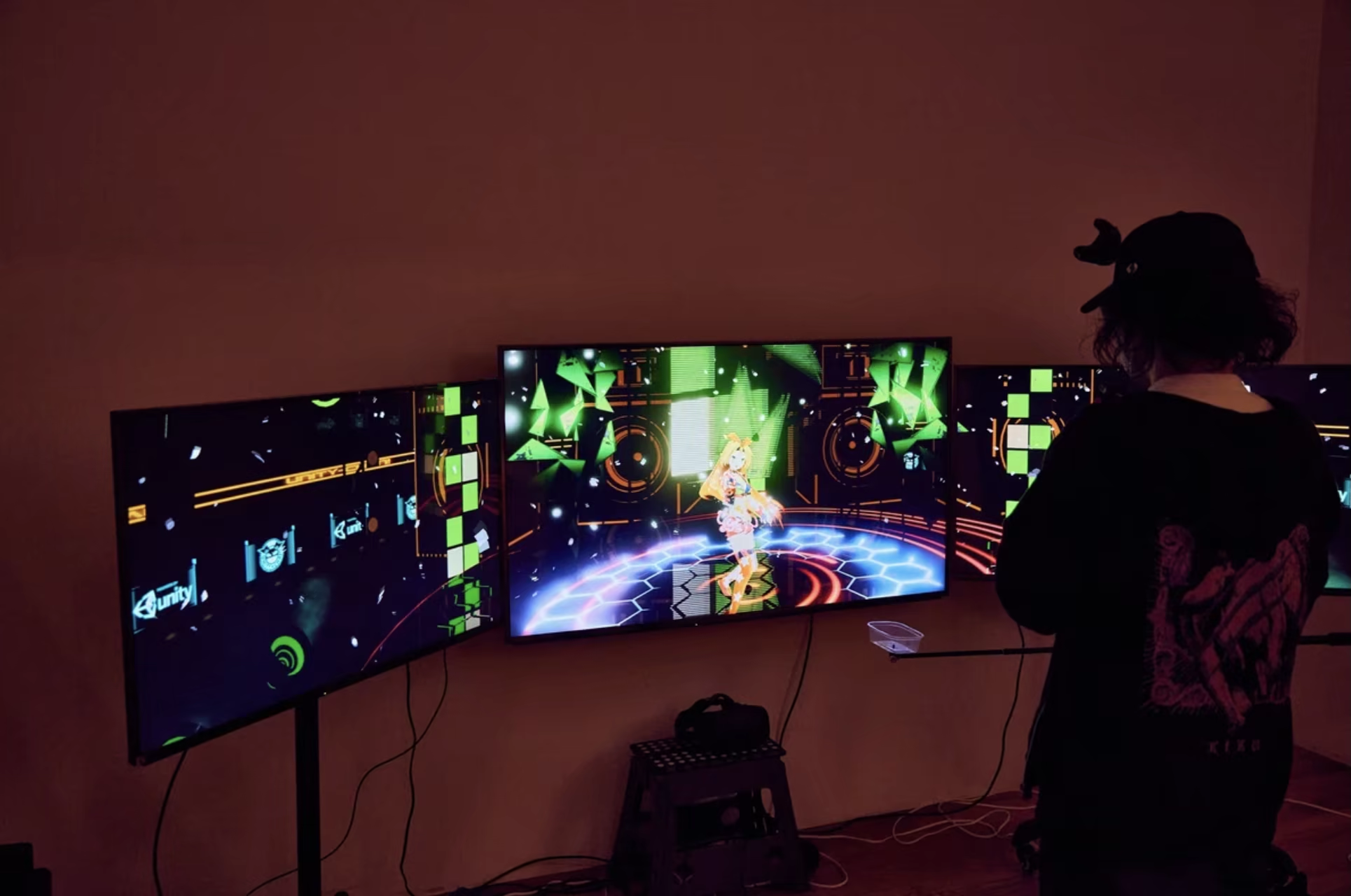
Professor Kazuhiko Hachiya of Tokyo University of the Arts created “HomemadeCAVE,” a piece that lets multiple people share a VR experience easily and inexpensively using Portalgraph.
Challenges
Existing VR display systems faced a variety of challenges. In 1992 the University of Illinois built the CAVE (Cave Automatic Virtual Environment), the world’s first full-scale immersive VR display: three walls and the floor of a dedicated cube-shaped room were covered with high-resolution projections, while a real-time head-tracking system delivered an almost 360-degree 3D view. The University of Tokyo advanced the concept in 1997 with CABIN, projecting onto all six surfaces (four walls, floor and ceiling) for a fully enveloping experience. These groundbreaking systems, however, required multiple high-end projectors, a purpose-built cube structure, precision tracking hardware and large computer clusters—costing hundreds of millions of yen and permanently fixed in special facilities. Their upkeep and the need for skilled operators proved prohibitive; Tokyo’s CABIN was dismantled in 2012 when maintenance became unsustainable.
Solution
Using Portalgraph, we built a “Homemade CAVE” that makes shared VR experiences easier and more affordable. By combining consumer 3D TVs bought on an auction site (Panasonic TH-60CX800 and TH-49CX800 purchased for roughly ¥40,000–60,000 each), 3D glasses, and VIVE trackers, we created a highly cost-effective CAVE system. Without any VR headsets, users can enjoy immersive 3D content such as live performances by characters like Hatsune Miku, PostPet, and Unity-chan. Simply adding the Portalgraph asset to Unity lets creators project a wide range of content with minimal effort.
Results
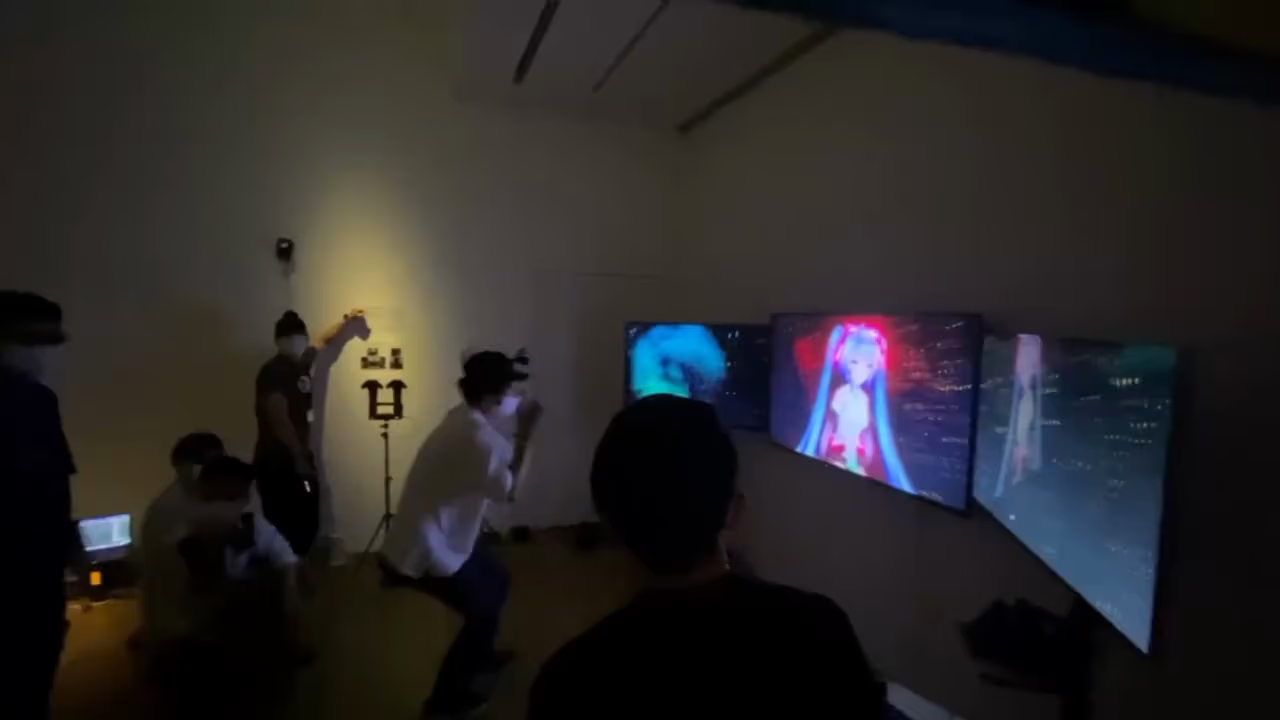
In November 2021, during Toride Geisai at Tokyo University of the Arts’ Toride campus, Professor Hachiya opened his lab for reservation-only demo sessions (up to five visitors per slot) of the homemade CAVE built from three consumer 3D TVs, Portalgraph, and VIVE trackers (event announcement, session report). Without VR headsets—just lightweight 3D glasses and a tracker-equipped cap—four to five people could share the same stereoscopic scene at once, earning strong praise from attendees. Portalgraph demo content such as the Unity-chan live stage was especially well received, and most visitors reported little to no motion sickness. The system was subsequently exhibited at Tokyo University of the Arts Museum’s “New Ecology and Art – Professor Yuko Hasegawa’s Retirement Memorial Exhibition” (May 28 – June 26, 2022) and at GINZA SIX (July 11 – 18, 2022). Affordable off-the-shelf hardware delivered an immersive 3D experience comparable to costly VR systems. The exhibitions, which also included a hands-on workshop, were covered in this report by Professor Hachiya and an official Unity Japan article, where Community Advocate Koichi Tamura praised the setup: “The immersion was beyond my imagination… I could enjoy the VR normally provided by head-mounted displays with almost no effort.”