
Articles
Clear explainers on XR-related knowledge

What is VR Development? Software, Languages, Cost, Process, and How to Choose a Vendor (2026)
A practical guide to VR development: software and languages, process, cost ranges, HMD vs projection VR, and how to choose a development partner.

What is Stereopsis (Stereo Vision)? Meaning, How It Works, How to See Stereograms, and 3D Technology Explained
Stereopsis is depth perception from the slight difference between left- and right-eye images. Learn how it works, how to view stereograms, and how 3D displays use it.
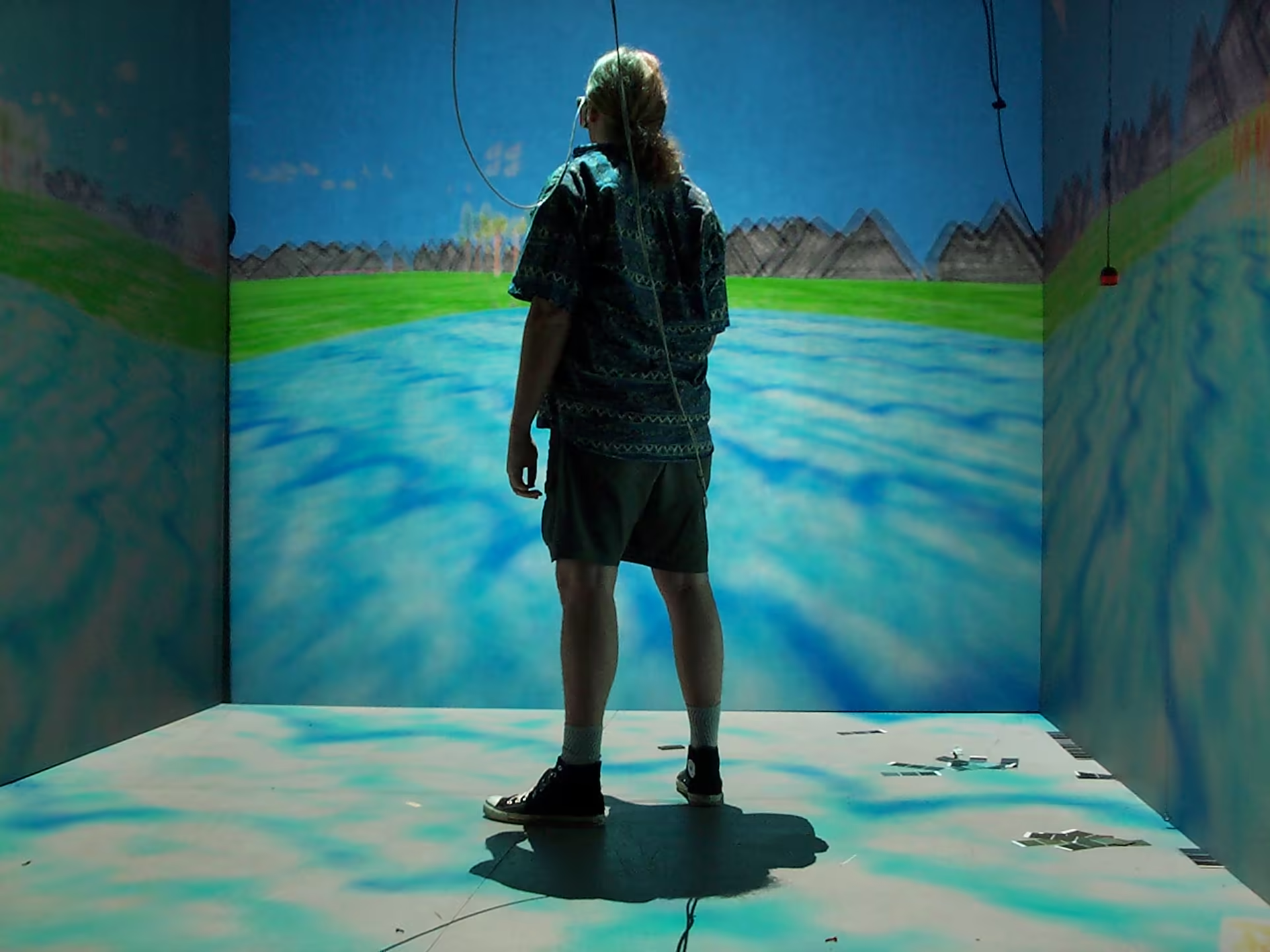
What is CAVE VR? Meaning, How It Works, History, Use Cases, and How It Differs from HMD VR
CAVE VR is a room-scale immersive system that projects stereoscopic 3D onto surrounding screens. Learn how it works, how it differs from HMD VR, and modern shared-immersion approaches.

What is a Hologram? Meaning, How Holography Works, Types, Security Uses, and the Difference from 3D Video Explained Simply
A hologram records and reconstructs a true 3D image using light interference. Learn how holography works, security uses, and how it differs from hologram-like video effects.

What is AR (Augmented Reality)? A Complete Guide to How AR Works, Differences from VR/MR/XR, Use Cases, and How to Make AR Apps
AR overlays digital content onto the real world via smartphones, glasses, and headsets. Learn what AR means, how it differs from VR/MR/XR, real-world use cases, and how to build AR apps.

The History of VR Before Portalgraph
Portalgraph traces its origins to the CAVE system, a pioneering virtual reality environment developed in the 1990s. This article explores the evolution of VR technology that led to Portalgraph.