
Stereopsis (also called stereo vision or binocular stereopsis) is the ability to perceive depth from the slight difference between the images that reach the left and right eyes. Humans use it every day without noticing — when reaching for a cup, judging how far a step is, or sensing that an object is “in front of” another. The same mechanism powers stereograms, 3D movies, VR headsets, and large-scale immersive projection. This article explains what stereopsis means, how it works, how to see stereo images, related optical illusions, stereoscopic display technologies, and practical applications.
What is Stereopsis? Meaning and Definition
In psychology and vision science, stereopsis refers mainly to binocular stereopsis: depth perception created when the brain fuses the left-eye and right-eye views into a single three-dimensional percept. Because the two eyes sit a few centimeters apart, each eye sees the world from a slightly different angle. That horizontal offset is called binocular disparity (or retinal disparity). The brain measures the disparity and reconstructs distance and relative depth.
In everyday Japanese usage, “立体視” often covers a broader set of ideas:
- The natural ability to see depth with both eyes
- Stereograms and “Magic Eye” style pictures that become 3D when viewed correctly
- Technologies that present different images to each eye so a flat screen looks three-dimensional (3D cinema, 3D TV, VR, CAVE-style projection)
In short: stereopsis is both a biological skill and the foundation of almost every practical 3D display.
How Stereopsis Works: Disparity, Vergence, and Fusion
Three ideas matter most for understanding stereo vision.
1. Binocular disparity
When object A is closer than object B, the angular separation between A and B differs between the left and right eyes. Near objects produce larger disparity; far objects produce smaller disparity. The brain uses this cue as a highly precise depth signal within roughly arm’s length to several meters.
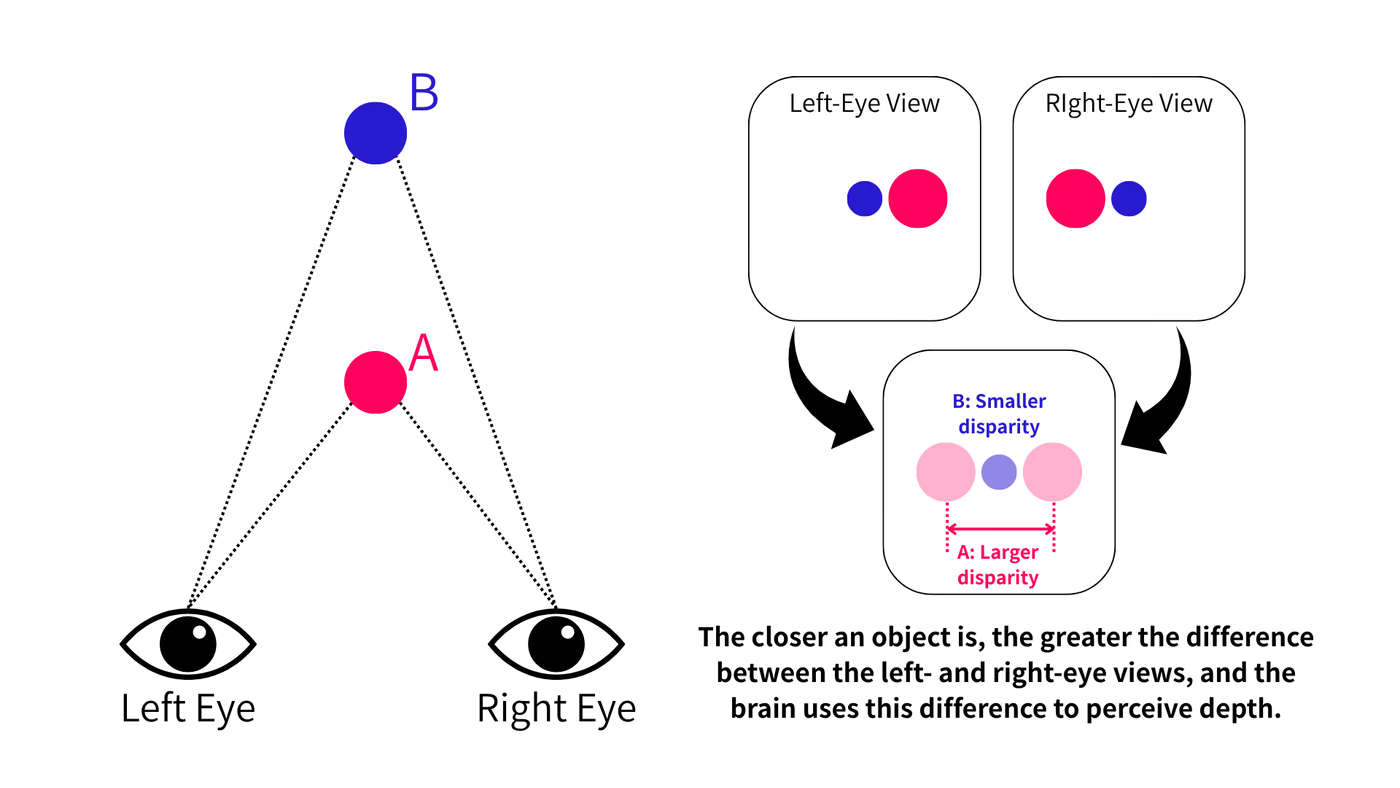
Figure 1. Binocular disparity — closer objects produce a larger left/right shift.
2. Vergence (eye convergence)
When you look at something nearby, both eyes turn slightly inward (converge). When you look far away, they become nearly parallel. Vergence angle is another depth cue that works together with disparity.
3. Binocular fusion
The brain does not keep two separate pictures. It fuses corresponding points from each eye into one stable percept. When fusion succeeds, people often describe a sense of transparency, volume, and “pop” — the classic feeling of successful stereo viewing. If corresponding points cannot be matched, binocular rivalry or double vision can occur instead.
Monocular Depth Cues: Seeing Depth with One Eye
Stereopsis is powerful, but it is not the only way we perceive depth. Even with one eye, several cues remain available:
- Occlusion (overlap) — an object that covers another is usually closer
- Linear perspective — parallel lines appear to meet at a vanishing point
- Aerial perspective — distant objects look hazier and lower in contrast
- Relative size — familiar objects look smaller when farther away
- Motion parallax — when you move, nearby objects shift more across the visual field than distant ones
- Shading and texture gradients — lighting and surface detail imply shape and distance
Motion parallax is especially important for displays and VR: even a flat video can feel three-dimensional if objects move at distances consistent with real depth (sometimes demonstrated with “wiggle stereoscopy”). Portalgraph-style systems also combine stereo imagery with viewpoint movement so parallax stays correct as the viewer walks.
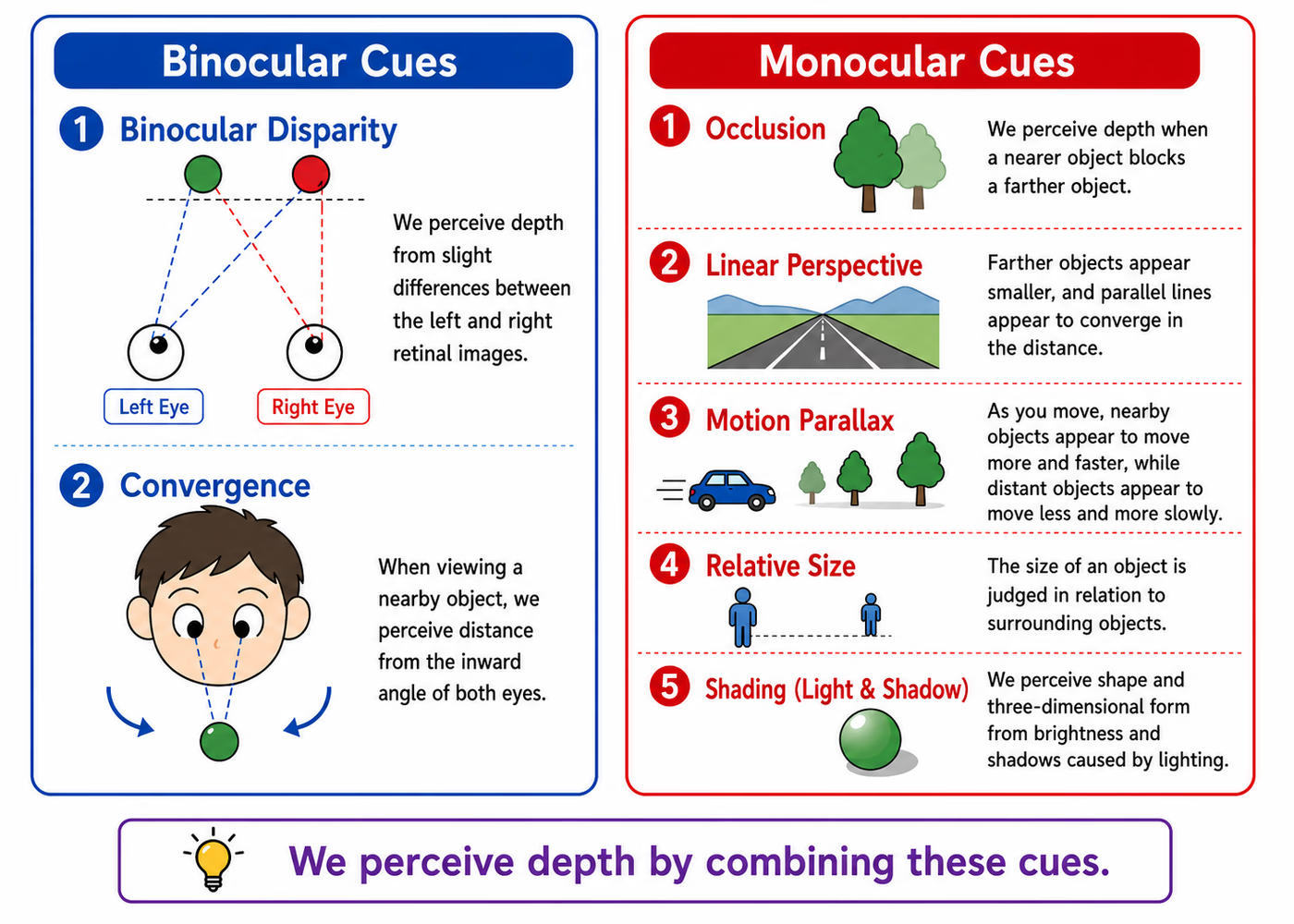
Figure 2. Binocular cues vs monocular cues for depth perception.
Try It: How to View a Stereogram
Many people first encounter stereopsis through stereograms — pairs or patterns that look flat until the eyes fuse them correctly. There are two common free-fusion methods:
- Parallel method (wall-eyed / divergence) — look “through” the image as if focusing on something farther away, so corresponding points overlap
- Cross-eyed method (convergence) — deliberately cross your eyes so the left image is seen by the right eye and vice versa
A widely used practice sequence (similar to popular “try stereo vision” tutorials) looks like this:
- Bring your face close to the picture and relax your gaze as if looking into the distance, until guide dots appear doubled (for example, four dots instead of two).
- Slowly move the picture away until the inner doubled dots overlap and you see three dots.
- Keep that gaze steady. Automatic focusing and fusion often produce a sudden sense of transparency and depth — that is when stereopsis has locked in.
- Without rushing to “look at the picture,” gradually increase distance until the full 3D image becomes clear. Forcing focus too early is a common reason people fail.
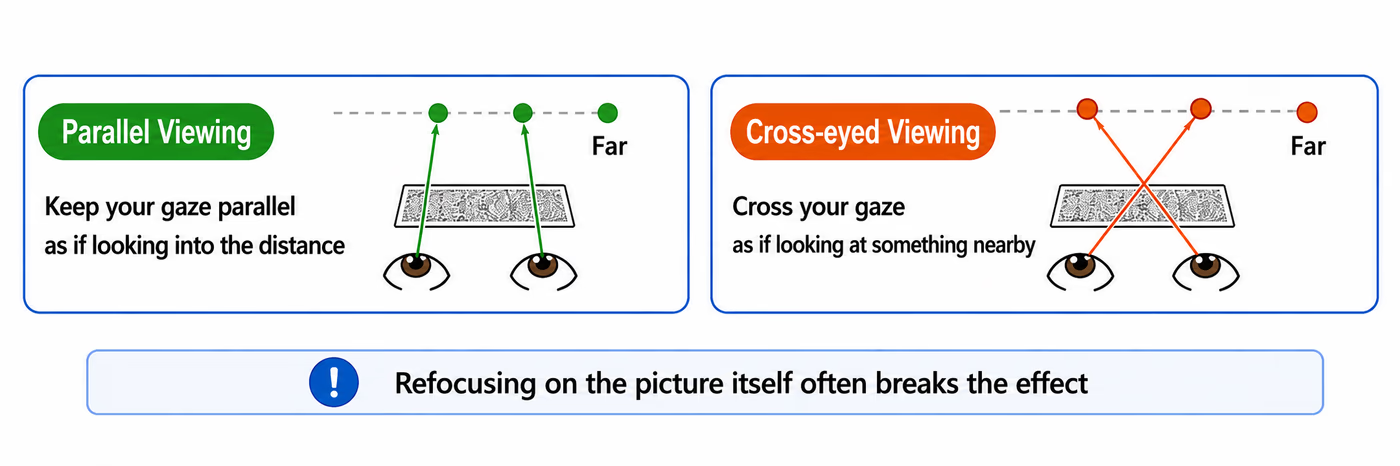
Figure 3. Parallel method vs cross-eyed method for viewing stereograms.
Not everyone can free-fuse stereograms easily. Practice helps, and difficulty is unrelated to intelligence. Some people also have reduced stereo acuity due to strabismus, amblyopia, or other binocular vision issues — in those cases, an eye-care professional is the right place for assessment (this article is educational, not medical advice).
Stereograms, Trick Art, and Optical Illusions
Stereograms sit next to a family of visual experiences that play with how the eyes and brain construct space:
- Random-dot stereograms (RDS) — depth is encoded only in disparity, with no recognizable monocular shape
- Autostereograms (“Magic Eye”) — repeating patterns that hide a 3D shape when fused
- Trick art / trompe-l’oeil — drawings that use perspective and shading so a flat surface looks solid
- Binocular rivalry and transparency effects — when the two eyes receive conflicting information, perception can alternate or settle into a transparent layering
These phenomena are popular as puzzles and demos because they make an invisible process — fusion — suddenly feel tangible. They are also useful teaching tools for explaining why left/right image pairs must be carefully designed in 3D cinema and VR.
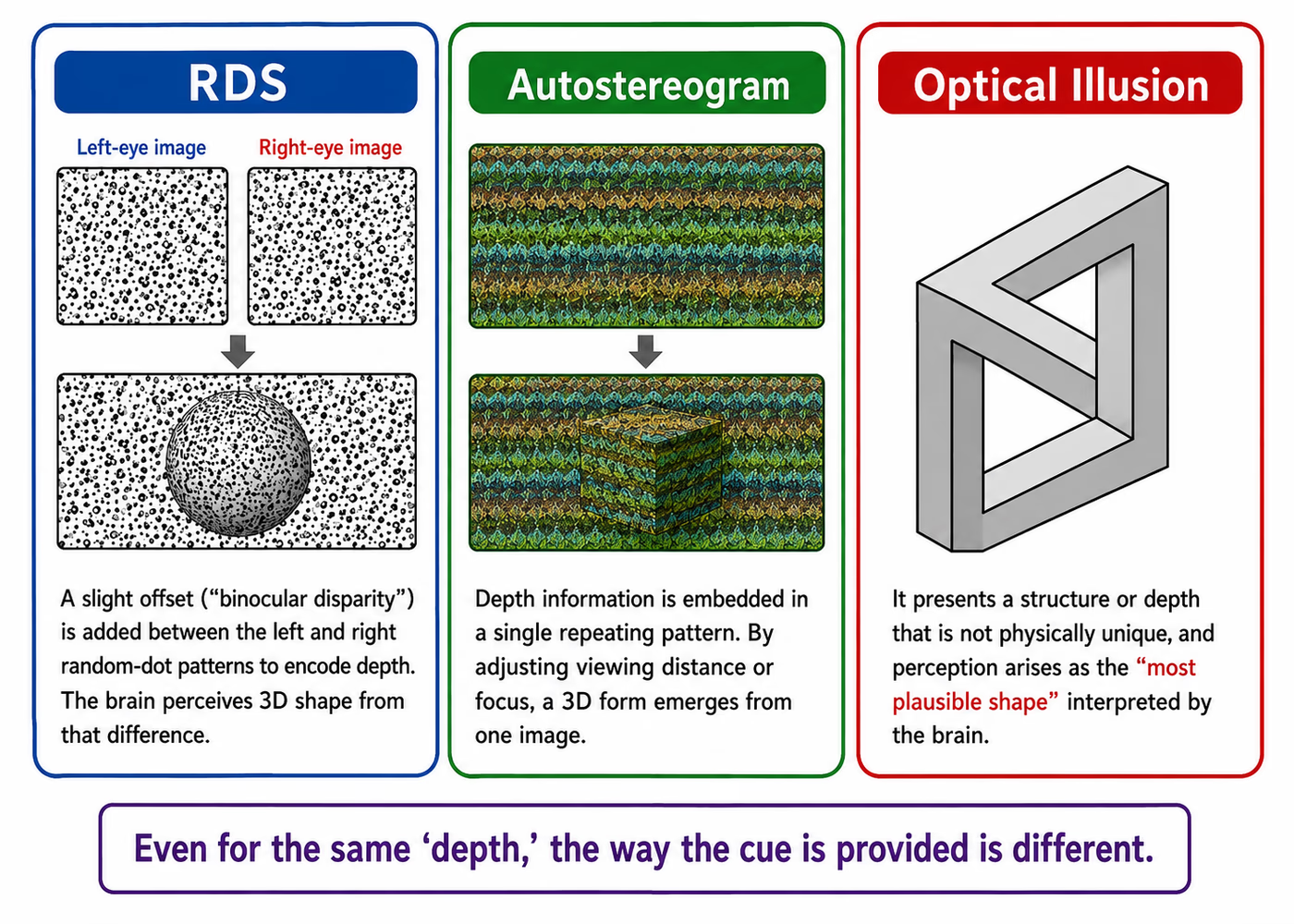
Figure 4. RDS, autostereogram, and trick art — same “depth,” different cues.
Technologies That Use Stereopsis
3D movies, 3D TVs, and VR headsets all rely on the same principle: show the left eye a left image and the right eye a right image. What differs is how those two images are kept apart.
| Method | How left/right are separated | Typical use |
|---|---|---|
| Anaglyph (red/cyan glasses) | Color filters | Print materials, teaching aids, simple 3D presentation |
| Polarized 3D | Polarization filters | Movie theaters, some 3D TVs / projectors |
| Active shutter | Alternating frames synced to glasses | 3D TVs, CAVE / immersive projection |
| HMD / VR headset | Separate display (or lens path) per eye | Games, training, personal immersive experiences |
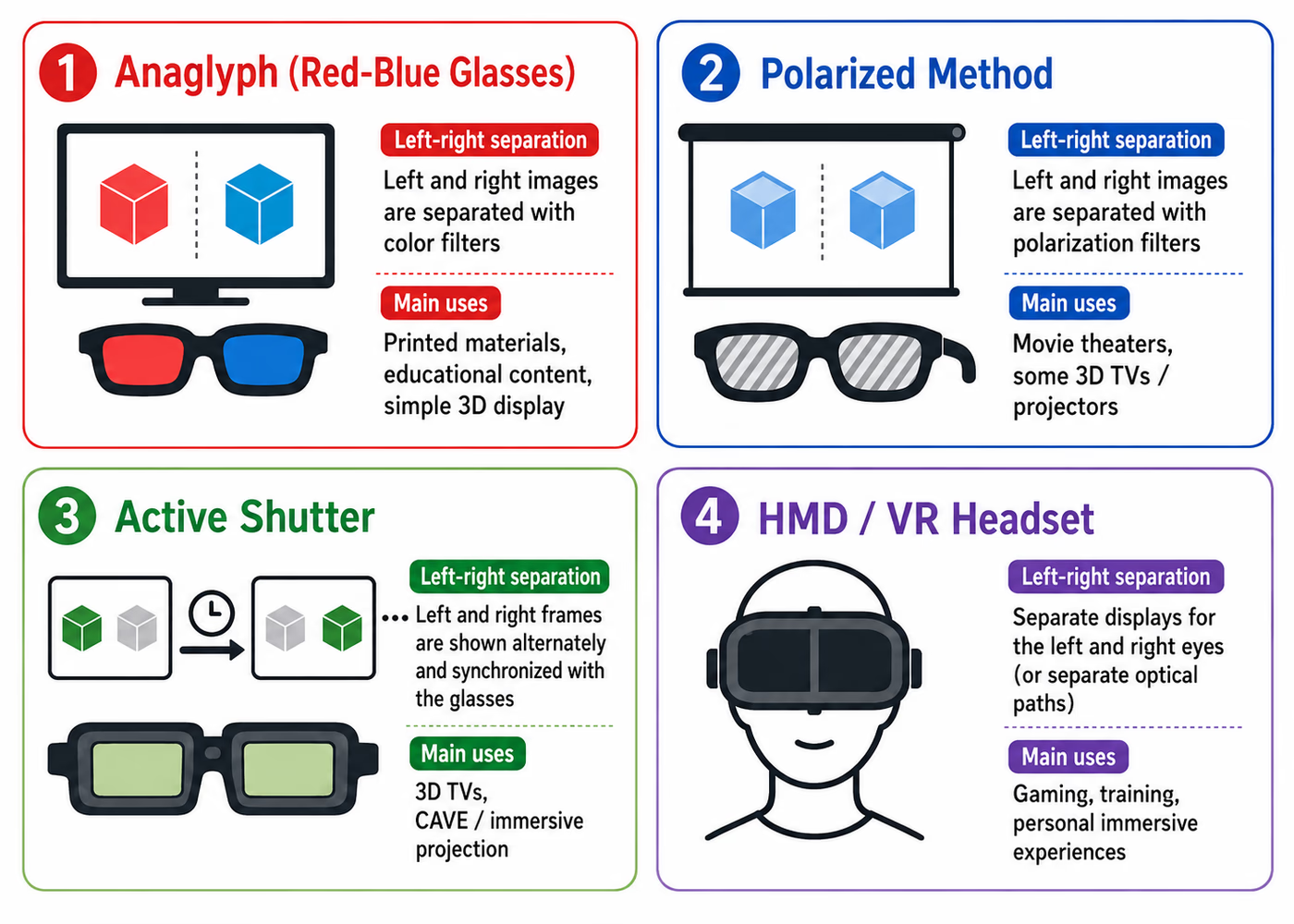
Figure 5. Four ways to separate left and right images for stereo displays.
On top of these methods, large immersive systems such as CAVE put stereoscopic images on room-scale screens and track the viewer’s head. Polarized or shutter glasses still separate left and right; what CAVE adds is continuous perspective updates as the person walks and looks around, so the virtual space stays aligned with their viewpoint.
Comfortable stereo also depends on tuning. Too much disparity causes eye strain; too little flattens the scene. And if the viewer moves while the image stays fixed to the screen, depth feels stuck to the glass — which is why viewpoint-tracked projection redraws the scene from the observer’s real position.
Where Stereopsis Is Used
- Entertainment — 3D films, theme-park attractions, games, and VR experiences
- Education and science communication — molecular models, astronomy, anatomy, and museum exhibits that need spatial understanding
- Design and manufacturing — reviewing vehicles, buildings, and equipment at near life size before production
- Medicine and vision care — stereo tests (for example RDS-based assessments) help evaluate binocular function; clinical interpretation belongs to professionals
- Training and safety — rehearsing spatial tasks in a controlled virtual environment
From Stereo Images to Shared Immersive Spaces
A stereogram on paper and a modern immersive installation share the same root idea: give each eye the right image, and the brain supplies the depth. What changes at larger scale is collaboration. Head-mounted VR is excellent for personal immersion, but it isolates wearers from the people standing next to them. Projection-based stereo — historically exemplified by CAVE VR — keeps lightweight stereo glasses, a visible room, and a shared viewpoint space.
That is the design space Portalgraph targets. Portalgraph is a VR projection technology that renders view-dependent stereoscopic imagery on everyday displays such as projectors, 3D TVs, LED walls, and monitors. Visitors do not need a heavy headset; they put on stereo glasses and see a virtual space open beyond the screen, with perspective that follows the viewer. For exhibitions, classrooms, showrooms, and design reviews, this is often a more natural way to put stereopsis to work than asking every participant to enter a personal HMD.
Portalgraph — stereoscopic, view-dependent VR on practical displays.
If you want the longer historical thread from early VR to CAVE-inspired projection, see The History of VR Before Portalgraph.
FAQ about Stereopsis
Q. What is the difference between stereopsis and 3D?
A. “3D” is a broad everyday word. Stereopsis specifically means depth perception from binocular disparity (and, by extension, display systems that exploit that mechanism).
Q. Why can I not see stereograms?
A. Free fusion takes practice, and some people have limited binocular stereo ability. Try both parallel and cross-eyed methods, use larger guide dots, and avoid forcing focus. Persistent inability to see stereo depth in daily life is worth discussing with an eye-care professional.
Q. Is stereopsis only binocular?
A. Classical stereopsis is binocular, but monocular cues (especially motion parallax) also create strong depth. Some research even discusses stereo-like depth experiences under monocular conditions in specific setups.
Q. Are 3D glasses required for every stereo display?
A. No. Autostereoscopic (glasses-free) displays exist, and HMDs use separate screens per eye. Many shared projection systems still use polarized or shutter glasses because they scale well to groups.
Q. How does Portalgraph relate to stereopsis?
A. Portalgraph uses stereopsis on purpose: it presents left/right images with correct disparity and updates the projection from the viewer’s position, so depth remains stable as people move in front of ordinary screens.
Conclusion
Stereopsis is the quiet engine behind everyday depth perception and every convincing stereo display. Once you know how disparity, fusion, and monocular cues fit together, stereograms stop feeling like magic tricks, and 3D movies, VR headsets, and immersive projection all look like variations on one principle: deliver the right image to each eye, then let the brain build space.
If you are planning an exhibit, lesson, showroom, or design-review experience that should feel truly three-dimensional — and ideally be shareable without isolating every visitor in an HMD — stereoscopic projection approaches such as Portalgraph are a practical next step.