

Portalgraph is a VR projection technology that projects virtual spaces into the physical world. To understand where Portalgraph comes from, it helps to look at the entire history of virtual reality (VR) — from early science fiction, through the first head-mounted displays (HMDs) and the CAVE system, all the way to modern devices such as Oculus Rift, HTC Vive, PlayStation VR, and Meta Quest. This article walks through that history and shows how Portalgraph positions itself as a modern descendant of CAVE.
Pygmalion's Spectacles (1935): VR as Science Fiction
The concept of VR actually predates computers. In 1935, American author Stanley G. Weinbaum published the short story "Pygmalion's Spectacles," which describes a pair of goggles that deliver a fully immersive experience combining sight, sound, smell, taste, and touch. It is often cited as the earliest detailed fictional description of what we now call virtual reality — a vision of VR goggles and stereoscopic displays written more than 80 years before the "VR Year Zero" of 2016.
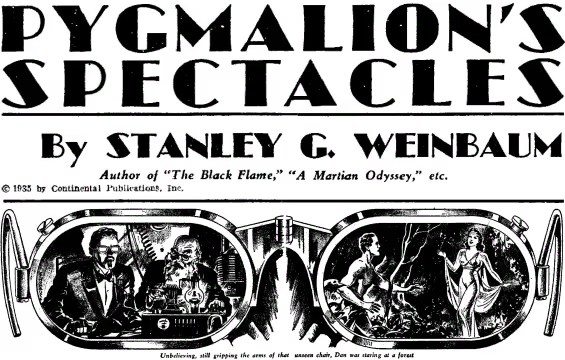
Pygmalion's Spectacles by Stanley G. Weinbaum (1935)
Sensorama (1962): The First VR-like Device
The first device commonly called a "VR machine" is Sensorama, built in 1962 by cinematographer Morton Heilig. Sensorama was an arcade-style cabinet that played short films combining 3D imagery, stereo sound, wind, vibration, and even scents — an early attempt at multi-sensory immersion. While it was not interactive in the modern sense, Sensorama introduced the core idea of replacing the real world with engineered sensory stimuli and is a fixture in every timeline of VR history.
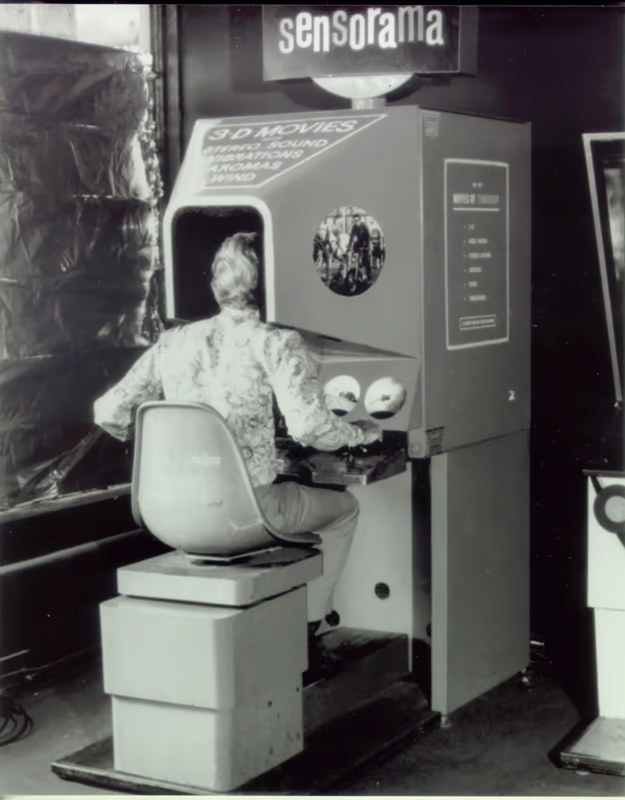
Sensorama by Morton Heilig (1962)
The Sword of Damocles (1968): The First Head-Mounted Display
In 1968, computer scientist Ivan Sutherland built the system popularly known as "The Sword of Damocles," widely regarded as the first true head-mounted display (HMD) VR system. The device was so heavy it had to be suspended from the ceiling above the user — hence the name. It rendered 3D wireframe graphics in real time based on the user's head position, laying out the blueprint for every HMD-based VR headset that followed.
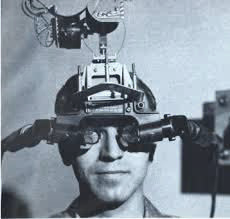
The Sword of Damocles by Ivan Sutherland (1968)
Aspen Movie Map (1978): An Interactive Walk-Through City
In 1978, MIT's Aspen Movie Map captured the streets of Aspen, Colorado with a car-mounted camera rig and let users "drive" through the city interactively on a screen. It is often cited as a spiritual ancestor of services like Google Maps Street View and demonstrated, long before the word "virtual reality" became mainstream, that interactive spatial video could let people virtually walk through real-world locations.
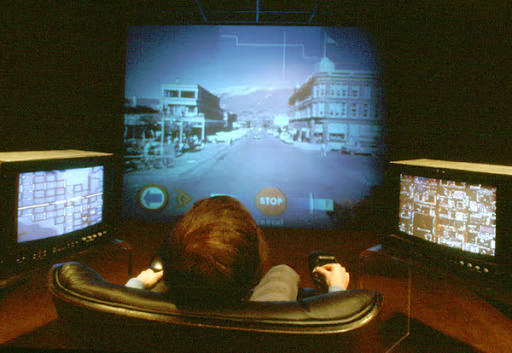
Aspen Movie Map by MIT (1978)
The 1980s: VPL Research, Jaron Lanier, and the term "Virtual Reality"
In the 1980s, Jaron Lanier — sometimes called one of the fathers of VR — founded VPL Research. The company commercialized HMDs such as the EyePhone and the DataGlove, which tracked finger movement, and Lanier himself is credited with popularizing the term "Virtual Reality." This is the period when immersive VR shifted from science fiction and isolated research experiments into something that could, at least in principle, be bought and used.
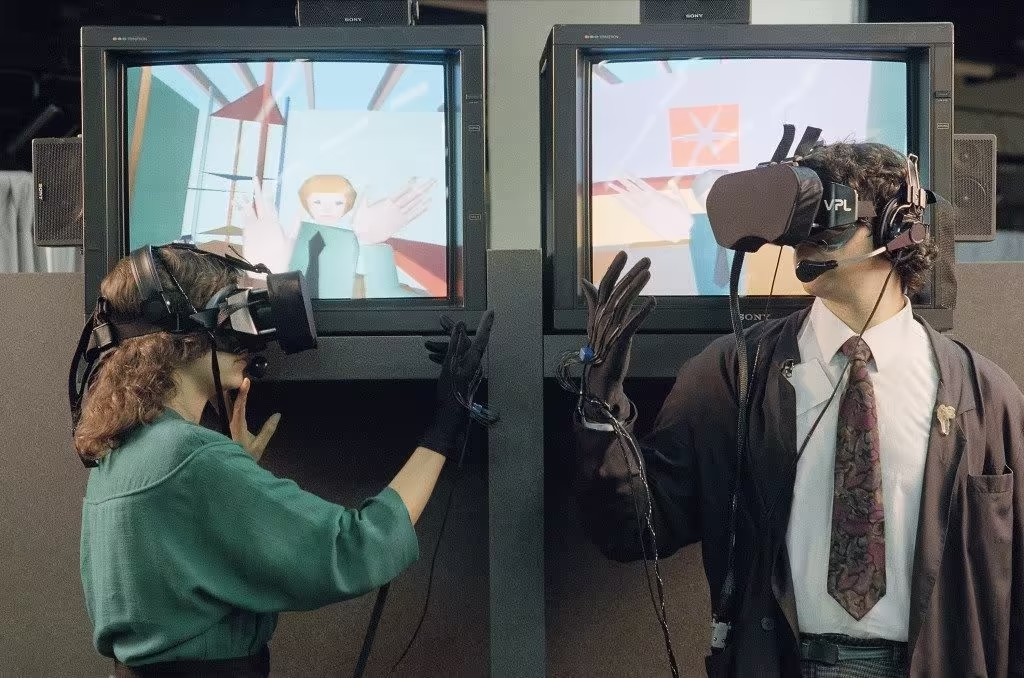
In this photograph from June 7, 1989, two people demonstrate the EyePhone system, which uses special goggles and a DataGlove.
CAVE (1992): A Room That Becomes a Virtual Space
In 1992, Thomas A. DeFanti, Carolina Cruz-Neira, and Daniel J. Sandin at the Electronic Visualization Laboratory (EVL), University of Illinois at Chicago, unveiled the CAVE (Cave Automatic Virtual Environment). CAVE projected 3D computer graphics onto the walls, floor, and sometimes the ceiling of a cube-shaped room and tracked the user's head to render each frame from the correct point of view.
Unlike HMDs, which completely blocked out the real world and were usually designed for one person at a time, CAVE allowed multiple users to share the same virtual space while wearing only lightweight stereoscopic glasses. It was arguably the best VR experience of its era and was considered a strong candidate for the future mainstream of VR.
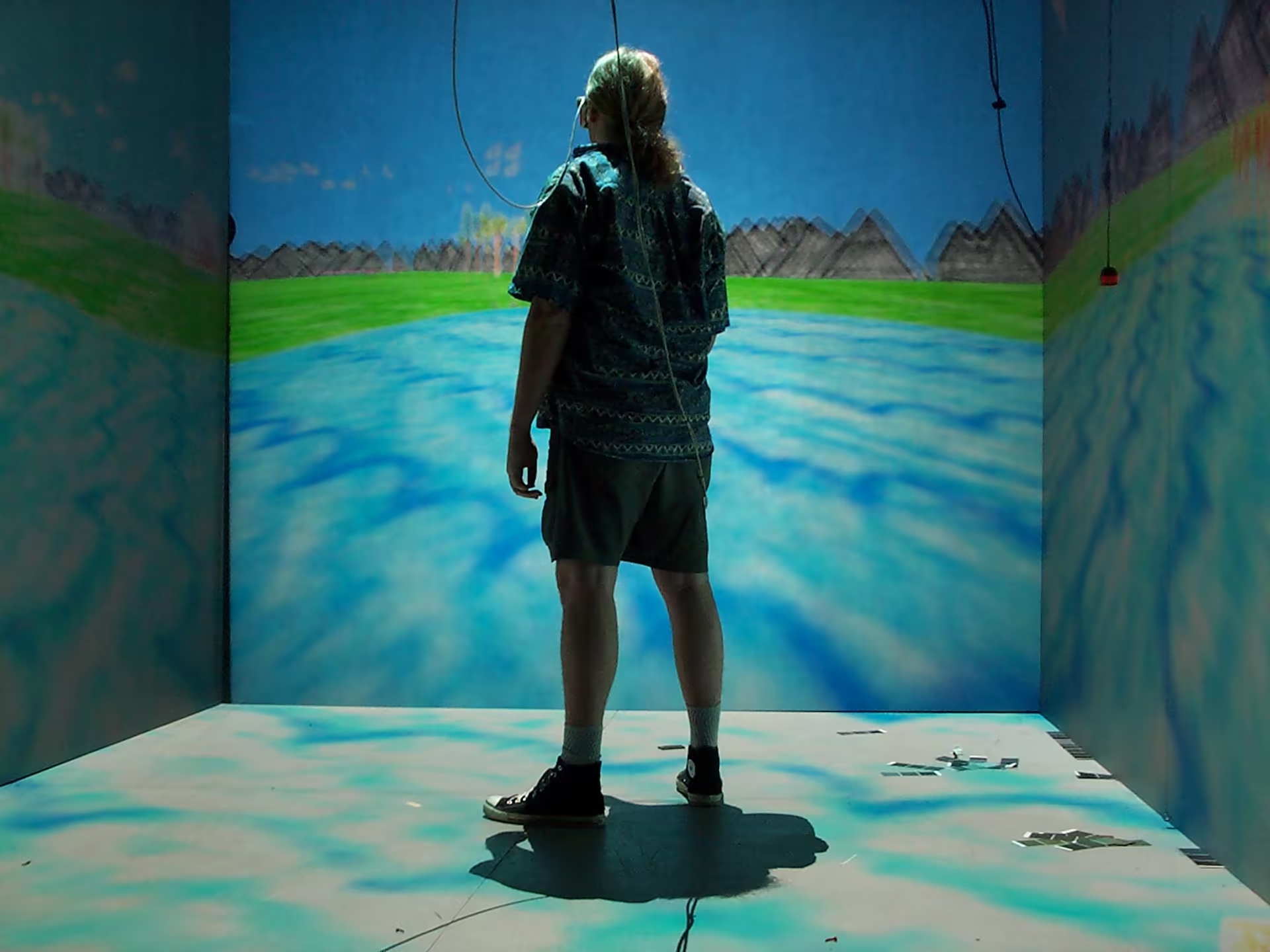
A man experiencing CAVE
The 1990s VR Boom: Virtual Boy and the First VR Winter
The 1990s were the first decade in which VR became a broad consumer topic. Arcades ran VR gaming systems such as Virtuality, and in 1995 Nintendo released the Virtual Boy, a home console using stereoscopic red LED displays. Virtual Boy attracted a lot of attention but suffered from an uncomfortable form factor and a thin lineup of games, and is now remembered as one of the most famous commercial failures in VR. The late 1990s and 2000s largely became a quieter era for consumer VR, with most progress happening in enterprise, research, and military training.
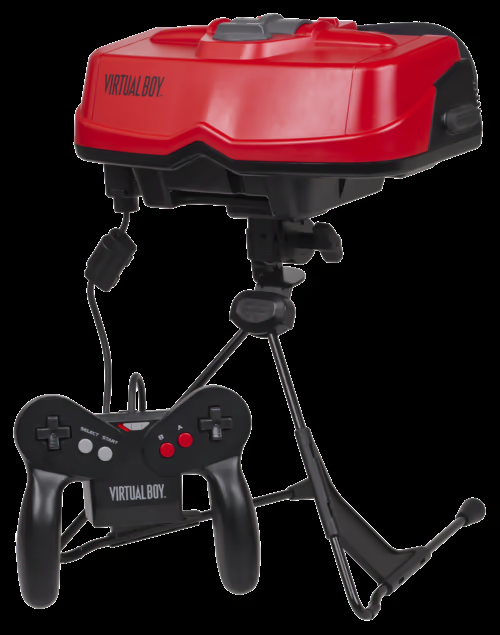
Nintendo Virtual Boy (1995)
"VR Year Zero": Oculus Rift, HTC Vive, and PlayStation VR
Consumer VR came roaring back in the 2010s. In 2012, Oculus VR — later acquired by Meta — launched the Oculus Rift DK1 on Kickstarter, effectively kicking off the modern, affordable HMD era. In 2016, the consumer Oculus Rift CV1, HTC Vive (co-developed with Valve), and PlayStation VR (PSVR) all launched within months of each other, and that year became widely known as "VR Year Zero." Later, standalone HMDs such as Oculus Go (2018) and the Oculus Quest / Meta Quest series (2019–) removed the need for a tethered PC, turning VR headsets into a mainstream consumer product category.
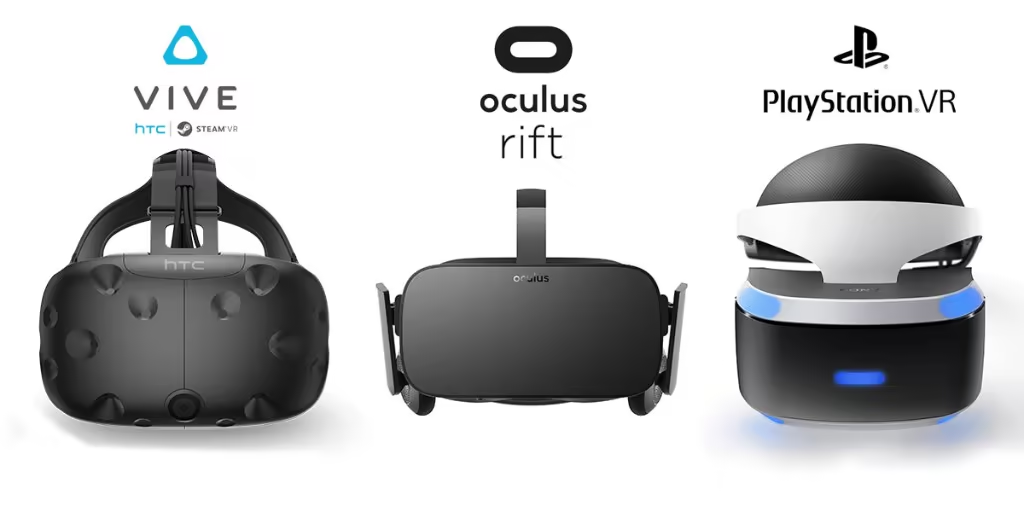
HTC Vive, Oculus Rift, and PlayStation VR — the three major headsets of "VR Year Zero" (2016). Image via TwoReality.
AR, MR, and XR: Kinect, HoloLens, and Cardboard
Around the same time, terms like augmented reality (AR) and mixed reality (MR) rose to prominence. Microsoft brought full-body motion tracking into living rooms with Kinect and later released the MR-focused HoloLens HMD. Google explored mobile VR with Google Cardboard and Daydream, while Samsung partnered with Oculus on the Gear VR smartphone headset. Today, VR, AR, and MR are often grouped together under the umbrella term XR (Extended Reality), and the word metaverse has become closely associated with this whole family of technologies.
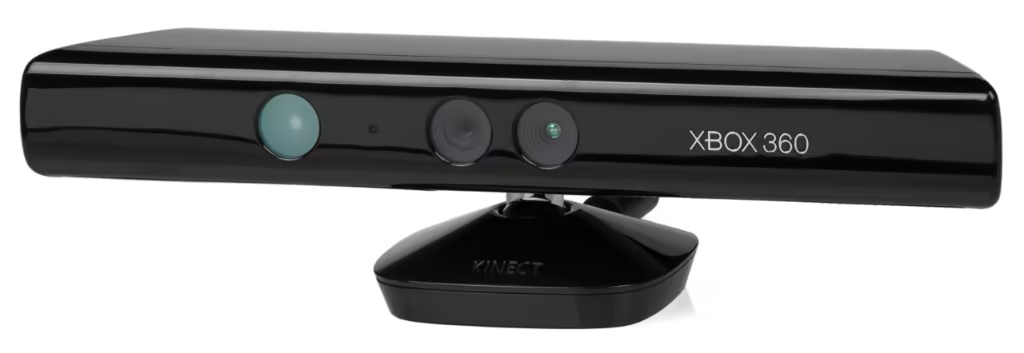
Microsoft Kinect (Xbox 360)
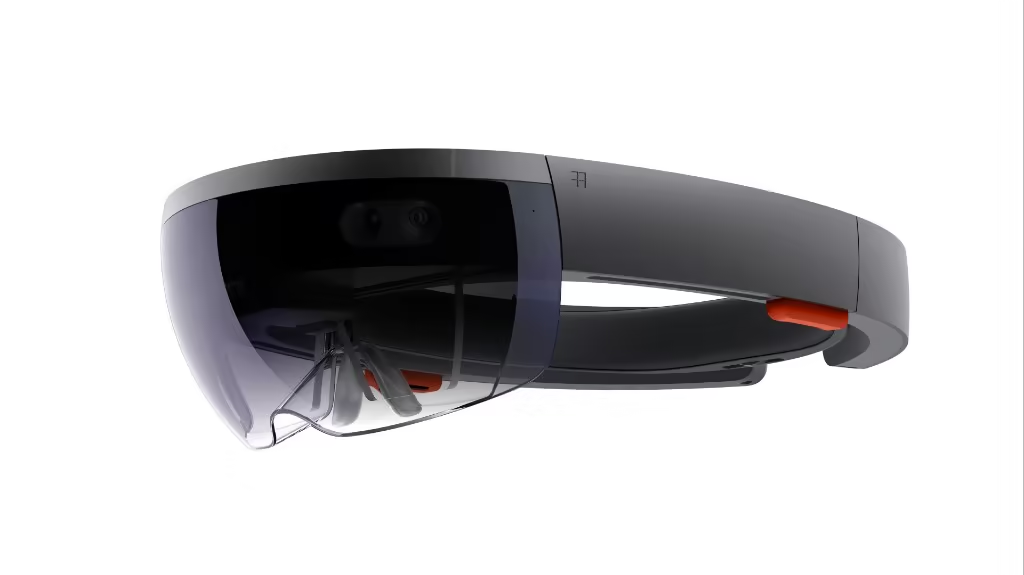
Microsoft HoloLens
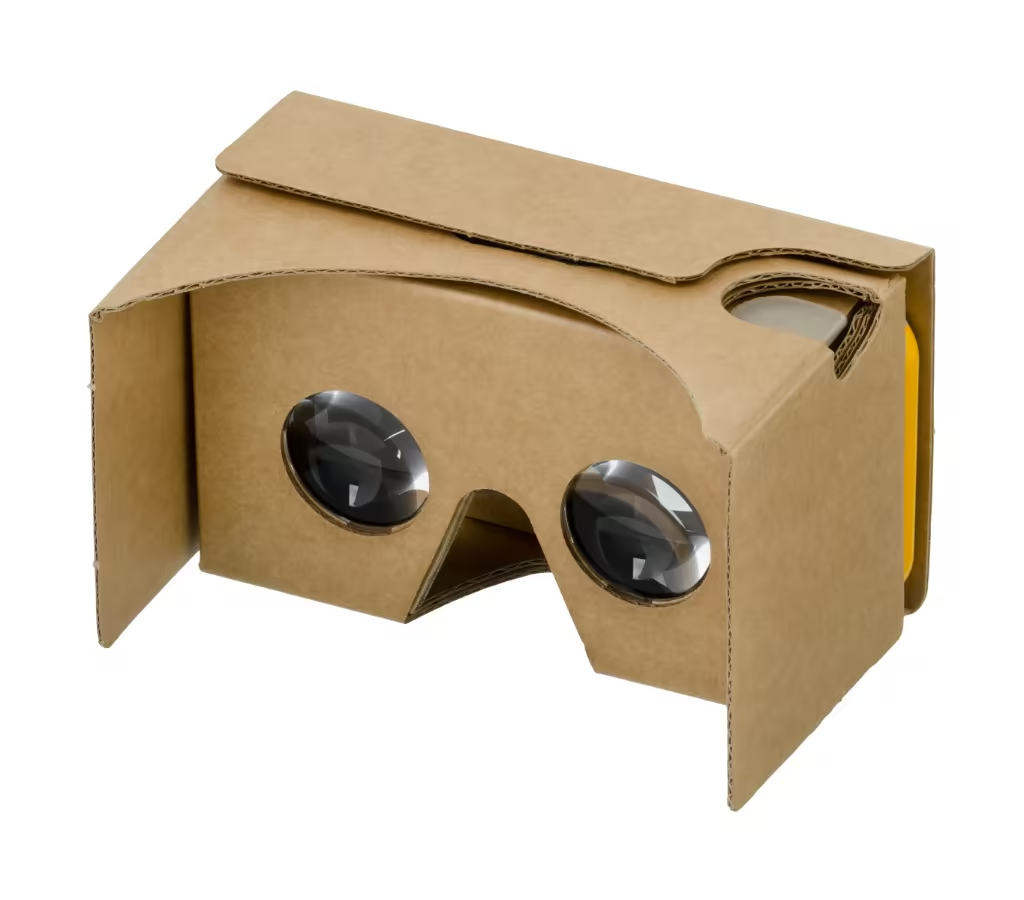
Google Cardboard
Portalgraph: Re-engineering CAVE for Modern Displays
HMDs dramatically expanded access to VR, but the "wear a headset on your head" assumption still brings real trade-offs: weight and fatigue, motion sickness (VR sickness), age restrictions, and the fact that the wearer can no longer see their surroundings. HMDs are also fundamentally single-user devices, which makes it hard to deliver a shared real-time VR experience to a group of people in the same physical space.
Portalgraph takes the opposite approach and goes back to CAVE's core idea. Using projectors, TVs, LED displays, and ordinary monitors — the flat displays already installed in everyday spaces — Portalgraph adds a software layer that renders stereoscopic imagery in real time based on where the viewer is standing. Users do not wear an HMD — they simply put on lightweight stereoscopic glasses and experience a VR space opening up on the far side of the screen.
Portalgraph
Compared to HMD-based VR, Portalgraph offers:
- Lightweight, age-friendly setup — even young children can participate.
- Full awareness of the real world — users still see the room around them, which is safer and less disorienting.
- Multi-user, shared experiences — multiple people can enjoy the same VR scene at the same time, inheriting CAVE's "everyone watches together" strength.
- Reuse of existing equipment — no need for a dedicated cube-shaped room or custom rig; projectors, TVs, and LED screens are enough.
- A sense that CG actually exists in the real world — instead of being fully enclosed inside a headset, users see 3D objects appearing in their physical environment.
In short, Portalgraph takes CAVE's vision of "scale plus immersion" and reshapes it for 2020s hardware, so that it can be deployed almost anywhere rather than only in expensive, purpose-built facilities.
HomemadeCAVE
One concrete example of CAVE's ideas being recreated in the modern era is the "HomemadeCAVE" project by Professor Kazuhiko Hachiya of Tokyo University of the Arts, built on top of Portalgraph as a "CAVE you can recreate at home." The project was highlighted by Unity Japan as an innovative use of Unity and was exhibited at the Tokyo University of the Arts Museum — a clear demonstration that Portalgraph can deliver an immersive VR experience using familiar, off-the-shelf equipment rather than a dedicated CAVE room.
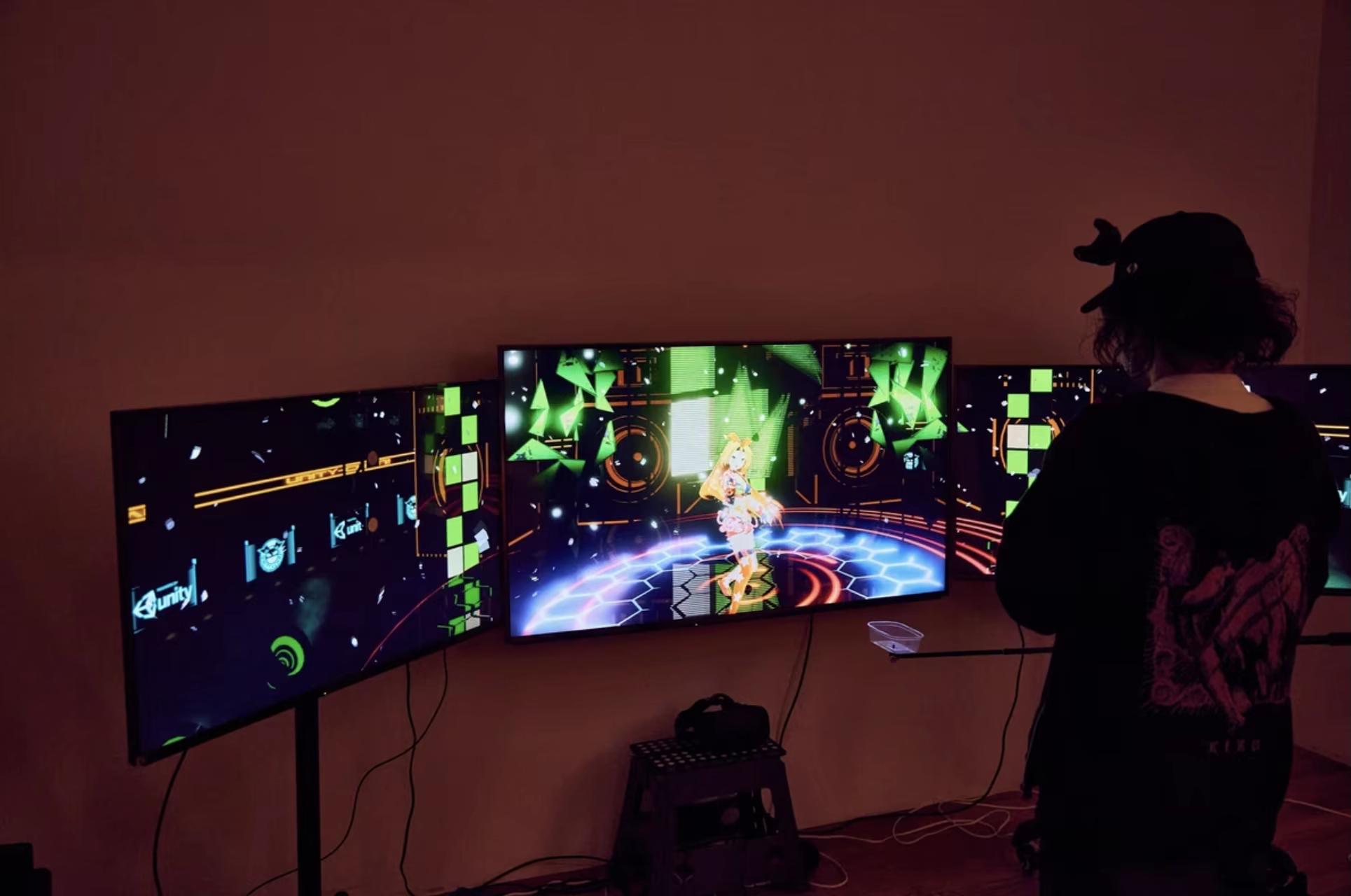
Portalgraph and the Wii Head-Tracking Demo
Portalgraph is sometimes compared to Johnny Chung Lee's famous Wii head-tracking demo ("Head Tracking for Desktop VR Displays using the Wii Remote," 2007). That demo is a striking piece of work, but Portalgraph's theoretical foundation does not come from it — it comes from CAVE, which predates the Wii demo by more than a decade. You can think of Portalgraph as CAVE's "view-dependent stereoscopic projection" reimagined for the devices we already have on our desks, walls, and stages.
Conclusion: From Pygmalion to CAVE to Portalgraph
The history of VR stretches from Weinbaum's 1935 story Pygmalion's Spectacles, through Sensorama (1962), The Sword of Damocles (1968), and the Aspen Movie Map (1978), to VPL Research's popularization of the term "Virtual Reality" in the 1980s, the arrival of CAVE in 1992, the 1990s VR boom and Nintendo's Virtual Boy, and the modern HMD era of Oculus Rift, HTC Vive, PlayStation VR, and Meta Quest.
HMDs are excellent at delivering deep, personal immersion, but they are poorly suited to shared, in-person VR in everyday locations. Portalgraph continues the CAVE lineage by using projectors, TVs, and other common displays to recreate an immersive virtual environment that several people can experience together, with no heavy headset, no age restriction, and full visibility of the surrounding space. Within the 70-plus-year arc of VR, Portalgraph positions itself as a "next VR" designed to be usable by anyone, anywhere, together.