
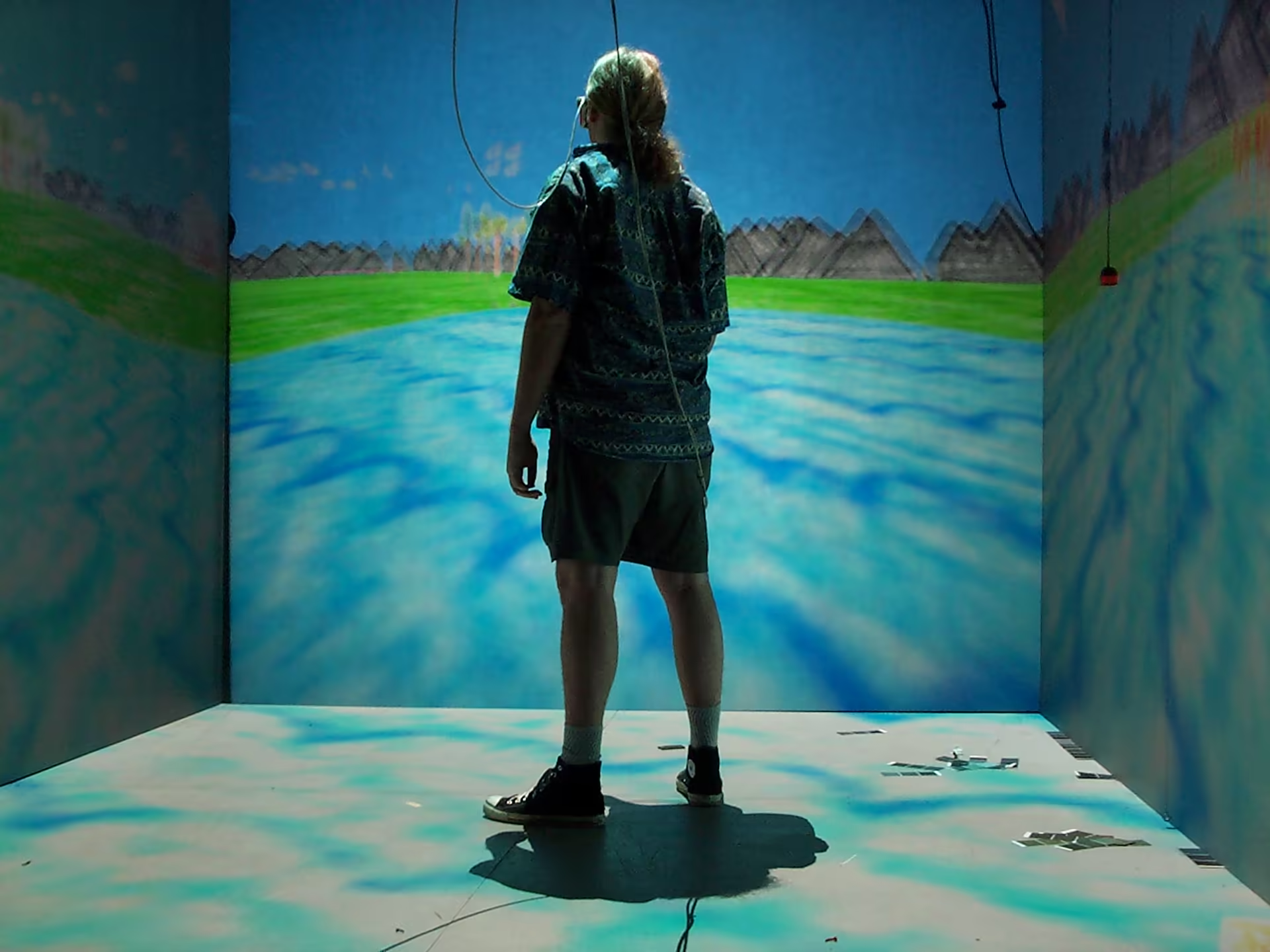
CAVE VR (Cave Automatic Virtual Environment) is a room-scale immersive VR system that projects stereoscopic 3D computer graphics onto the walls, floor, and sometimes the ceiling of a cube-shaped space. Unlike a head-mounted display (HMD), users wear only lightweight stereoscopic glasses, keep their surroundings in view, and can share the same virtual world with multiple people at once. This article explains what CAVE VR is, how it works, its history and use cases, how it differs from HMD VR, and how modern solutions such as Portalgraph make CAVE-class experiences more practical to deploy.
What is CAVE VR? Definition and Meaning
CAVE stands for Cave Automatic Virtual Environment. Developed in 1992 at the Electronic Visualization Laboratory (EVL), University of Illinois at Chicago by Carolina Cruz-Neira, Daniel J. Sandin, and Thomas A. DeFanti, it is one of the most influential immersive projection technologies in VR history. A typical CAVE VR setup uses a roughly 3-meter cube, projects left-eye and right-eye images onto multiple screens, and tracks the primary user's head position so the perspective updates in real time as they move.
A similarly named title, Cave Crave VR — a cave-exploration horror game for Steam and Meta Quest — is unrelated to the technology covered here. This article focuses on CAVE as an immersive projection VR system used in research, industry, education, and experience design.
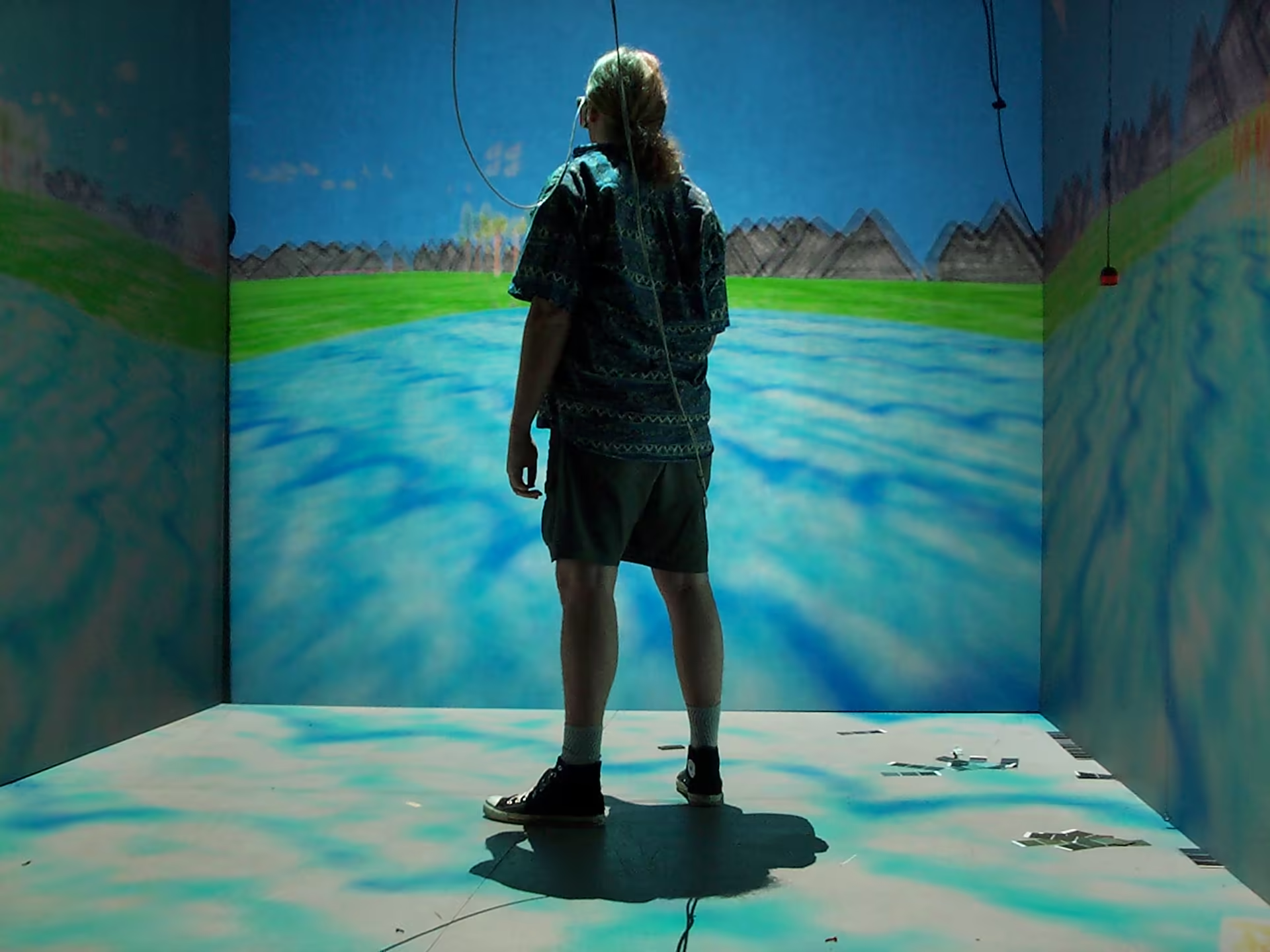
A man experiencing CAVE. Image via Wikipedia: Cave automatic virtual environment.
How CAVE VR Works
CAVE VR belongs to a family of systems often called Immersive Projection Technology (IPT). The core building blocks are:
- Multi-surface stereoscopic projection — Left- and right-eye images are projected onto 2 to 6 surfaces (walls, floor, ceiling), often via rear projection or mirrors to keep the room clear.
- Stereoscopic glasses — Active shutter glasses (or passive polarized glasses in some setups) synchronize with the alternating left/right frames so each eye receives the correct image.
- Head / body tracking — Sensors track the lead viewer's position and orientation so the rendered viewpoint stays correct as they walk and look around.
- Synchronized rendering cluster — Multiple computers (or a tightly synchronized GPU pipeline) keep every screen temporally and geometrically aligned.
Because the virtual world surrounds the user in physical space, CAVE VR delivers a wide field of view, life-size scale, and a sense of "being inside" a digital model — especially valuable for architecture walkthroughs, vehicle packaging reviews, and scientific visualization.
A Brief History of CAVE VR
1992: Birth at EVL
The original CAVE was unveiled in 1992 and presented at SIGGRAPH '93. At a time when HMDs were heavy, low-resolution, and isolating, CAVE offered a shared, high-immersion alternative that multiple observers could experience together.
Japan: CABIN, COSMOS, and π-CAVE
Japan became an important hub for multi-sided CAVE systems. The University of Tokyo's CABIN (1997–2012) enclosed users with five large screens. COSMOS in Kakamigahara, Gifu offered a rare six-sided immersion space. Kobe University's π-CAVE, based on Christie Digital's HoloStage, was one of Japan's largest CAVE installations, with a screen volume of roughly 3 m × 3 m × 7.8 m.
From projectors to LED (CAVE2 and beyond)
Later generations replaced or supplemented projectors with high-resolution tiled displays and LED walls (sometimes called CAVE2). Modern pipelines also leverage game engines such as Unity and Unreal Engine (including nDisplay-style multi-output setups) to drive CAVE content.
Types of CAVE VR Systems
- 2-sided / corner CAVE — Two screens meeting at a corner; lower cost entry point for design reviews.
- Powerwall — A single large stereoscopic wall; not a full CAVE, but often the first step toward immersive projection.
- 3–4 sided CAVE — Classic configuration with front + side walls and often a floor.
- 5–6 sided CAVE — Near-complete enclosure including ceiling; maximum immersion, maximum cost and complexity.
- LED / flat-panel CAVE — Uses 3D-capable displays instead of projectors; can reduce dark-room constraints.
Where CAVE VR Is Used
CAVE VR shines whenever scale, collaboration, and spatial understanding matter more than personal portability.
- Product design & manufacturing — Full-scale vehicle, aircraft, and plant layout reviews with multiple stakeholders in the same room.
- Architecture & urban design — Walk-through evaluations of buildings and city spaces before construction.
- Scientific visualization — Molecular structures, fluid dynamics, climate and medical simulation data at human scale.
- Training & safety — Hazardous-environment rehearsal without exposing trainees to real risk.
- Education, museums, and entertainment — Shared immersive exhibits where groups learn or experience content together.
- Kansei / human-factors engineering — Studying perception, comfort, and decision-making inside controlled immersive scenes.
CAVE VR vs HMD VR: Key Differences
| Aspect | CAVE VR | HMD VR |
|---|---|---|
| Wearable load | Lightweight 3D glasses | Headset on the head |
| Real world visibility | Surroundings remain visible | Usually blocked |
| Shared experience | Multiple people in the same space | Primarily single-user |
| Scale / FOV | Room-scale, life-size models | Portable, personal immersion |
| Cost & footprint | High for classic installations | Relatively low per user |
HMDs won the consumer market on price and convenience. CAVE VR remains compelling wherever teams must discuss the same digital space face-to-face — design reviews, client presentations, museum groups, and classroom cohorts.
Challenges of Traditional CAVE Installations
Classic CAVE systems are powerful, but adoption has been limited by practical barriers:
- Cost — Depending on the number of sides and image quality, installations can range from tens of millions of yen to several hundred million yen (international references often cite roughly €80,000 for a 2-sided corner setup up to €750,000 for a full 6-sided CAVE).
- Space — Projectors, throw distance, dark rooms, cooling, and control desks demand dedicated facilities.
- Operations — Calibration, synchronization, and specialist operators add ongoing cost; some research CAVEs have been retired when maintenance became unsustainable.
- Content production — Multi-output, tracked stereoscopic content requires specialized pipelines.
These constraints are exactly why the industry has looked for ways to preserve CAVE's strengths — shared immersion, scale, and low wearable burden — while lowering the barrier to entry.
Modern CAVE VR with Portalgraph
Portalgraph is a VR projection technology that re-implements the core CAVE idea — viewpoint-tracked stereoscopic projection — on everyday displays such as projectors, 3D TVs, LED walls, and monitors. Instead of requiring a purpose-built cube room and a large rendering cluster, Portalgraph adds a software layer that renders correct stereoscopic imagery based on where the viewer is standing.
For organizations that want CAVE-class experiences for exhibitions, education, showrooms, or design communication, Portalgraph makes it realistic to:
- Build multi-person immersive experiences without forcing every visitor into an HMD
- Reuse existing screens and venues instead of constructing a dedicated CAVE room
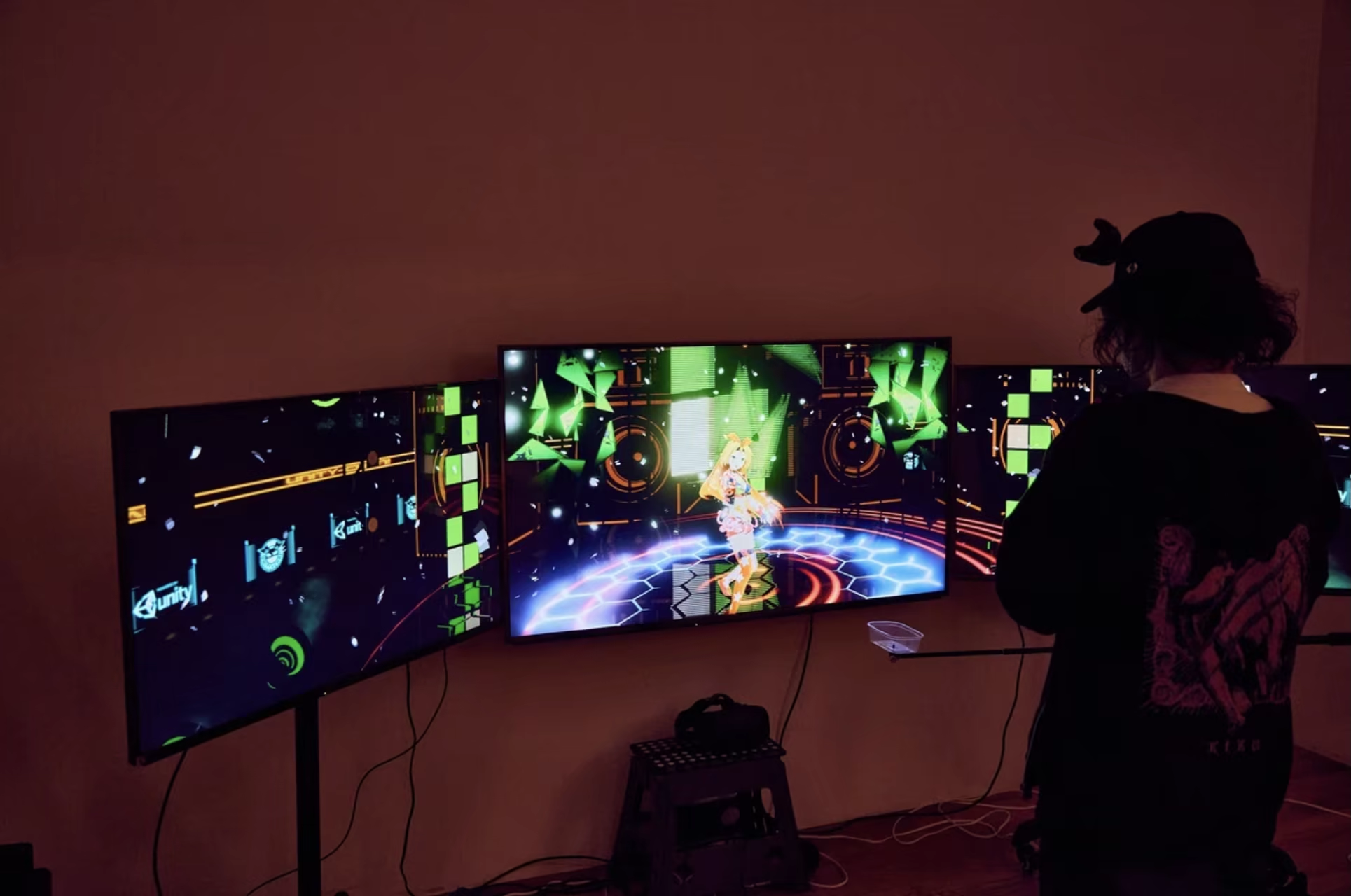
- Develop content in familiar tools such as Unity
- Prototype from a single display and scale up to multi-screen CAVE-like layouts
For the longer story of how CAVE led to Portalgraph, see The History of VR Before Portalgraph.
Portalgraph — CAVE-inspired immersive VR on practical display setups.
HomemadeCAVE
A concrete example is HomemadeCAVE, created by Professor Kazuhiko Hachiya of Tokyo University of the Arts with Portalgraph. Using consumer 3D TVs, stereoscopic glasses, and VIVE trackers, the project delivered a shared CAVE-like experience at a fraction of the cost of a classical installation — and demonstrated that CAVE VR no longer has to mean a multi-hundred-million-yen facility. See also the HomemadeCAVE case study.
FAQ about CAVE VR
Q. What does CAVE VR stand for?
A. CAVE stands for Cave Automatic Virtual Environment — a room-scale immersive VR system based on multi-surface stereoscopic projection and head tracking.
Q. Is "Cave Crave VR" the same as CAVE VR?
A. No. Cave Crave VR is a consumer VR game about cave exploration/horror. CAVE VR in this article refers to the immersive projection system used in research and industry.
Q. How is CAVE VR different from Meta Quest or other HMD VR?
A. HMDs are portable and personal. CAVE VR surrounds users with projected (or display-based) stereoscopic imagery so several people can share the same life-size virtual space while still seeing each other and the room.
Q. Who should consider introducing CAVE VR?
A. Teams that need collaborative spatial reviews — manufacturers, architects, research labs, museums, schools, and experience venues — especially when HMDs create friction for visitors or stakeholders.
Q. Can Portalgraph build a CAVE-like system?
A. Yes. Portalgraph is designed around CAVE's core principles and has been used for HomemadeCAVE and many multi-person immersive installations. If you are evaluating CAVE VR development or modernization, we can help from planning through content and deployment.
Conclusion
CAVE VR remains one of the most compelling answers to a question HMDs still struggle with: how do multiple people share the same immersive digital space, at real-world scale, without isolating each other? Understanding its meaning, mechanism, history, and trade-offs is the first step toward choosing the right immersive system for your project.
If you are considering a CAVE VR installation, a modern CAVE-like experience for an exhibition or classroom, or content development for multi-screen immersive VR, Portalgraph can support you end to end.